The next generation of AAPI leaders is already making an impact across Massachusetts.
AAPIC’s Youth Council brings together young people from across the Commonwealth who are turning their lived experiences into action—identifying challenges in their communities, developing solutions, and building connections with organizations and leaders working to create change.
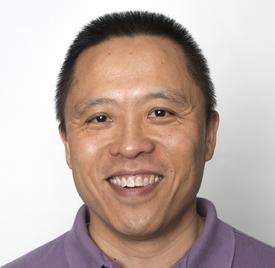
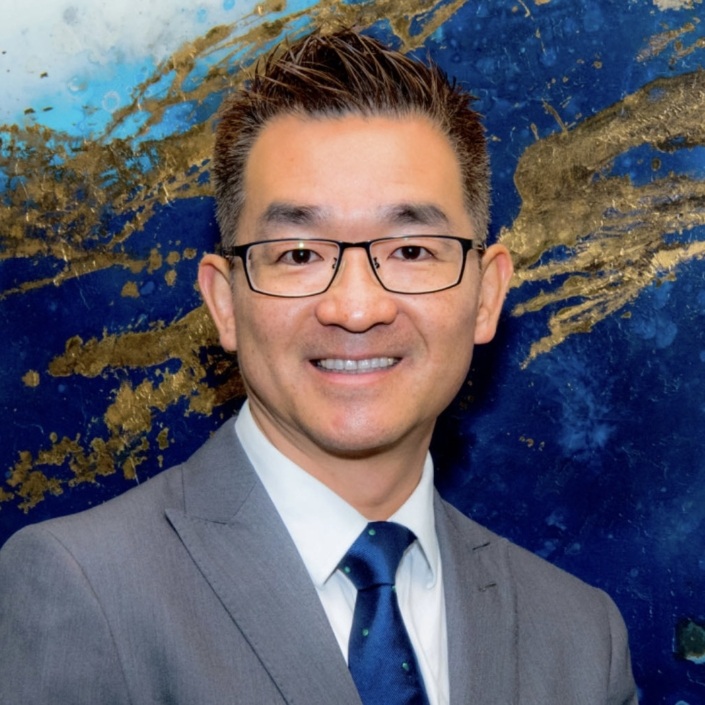
This year’s Youth Council projects demonstrate how young people are strengthening their communities through education, storytelling, civic engagement, and public service.This showcase included Representative Tackey Chan, Senator Vanna Howard, and Representative Amy Mah Sangiolo, as well as legislative staff from Representative Tram Nguyen‘s office. AAPIC was honored to welcome our legislative leaders and grateful for the dedication and time they have spent in empowering and hearing directly from AAPI youth.
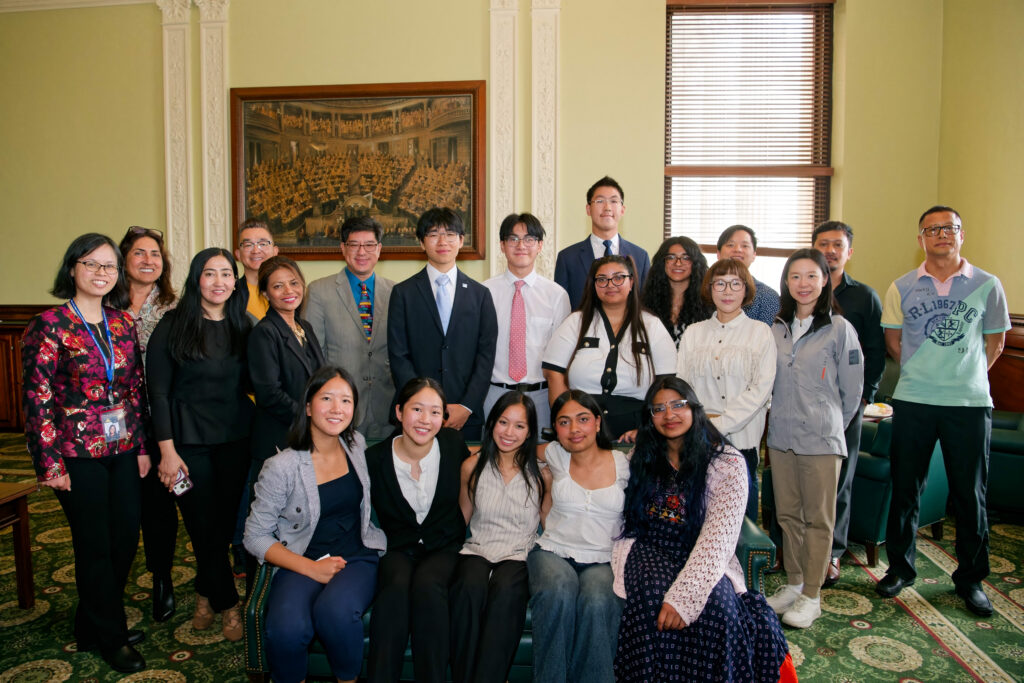
As the Commonwealth’s permanent, statewide body dedicated to addressing the needs and challenges of the AAPI community, AAPIC creates pathways for young people to develop as leaders through mentorship, civic engagement, and community-centered leadership opportunities.
Through the Youth Council, students develop the experience, confidence, networks, and civic understanding needed to contribute meaningfully to public life.
During the 2025–2026 program year, 14 students representing 12 municipalities across Massachusetts partnered with educators, libraries, nonprofits, healthcare providers, and community organizations to address issues they experienced or witnessed firsthand. Their projects focused on four major areas: mental health and wellness, AAPI education and representation, cultural identity and storytelling, and community engagement and civic participation.
Connecting Youth Voices With Public Leadership
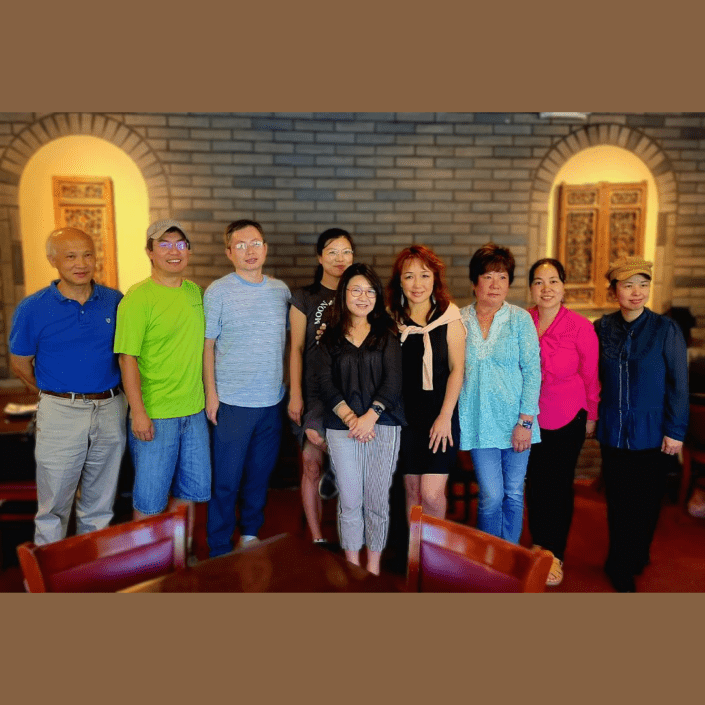
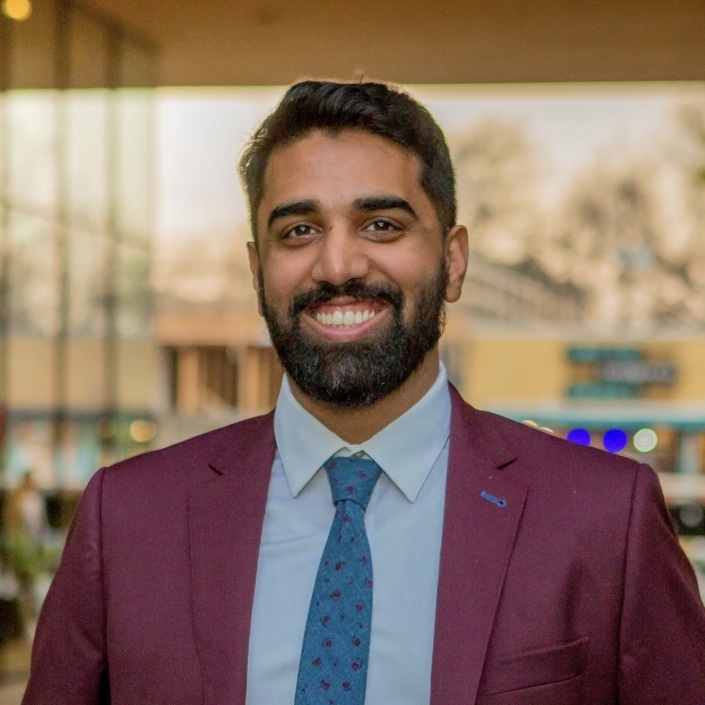
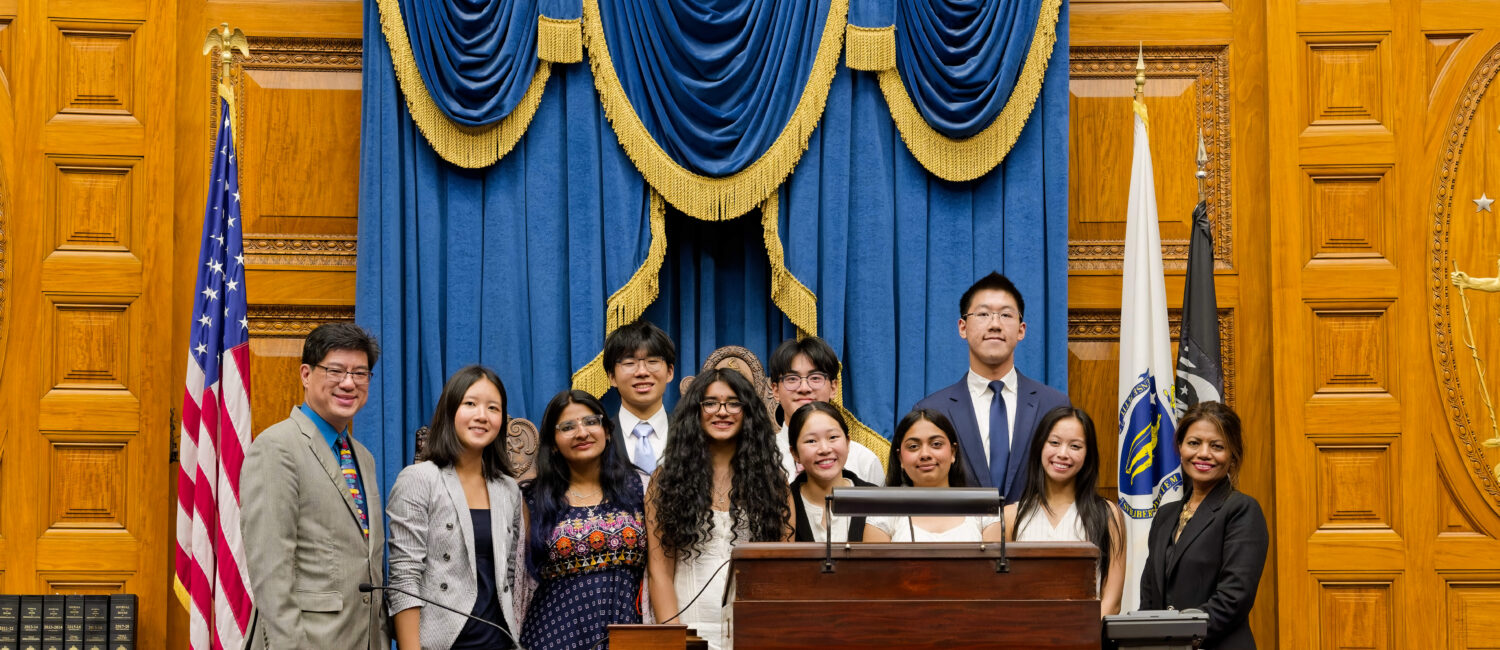
A defining moment of the Youth Council experience is the AAPIC Youth Council Showcase, where students share the projects they developed throughout the year with legislators, legislative staff, and community leaders. The event showcased the depth of students’ work, highlighting months of research, collaboration, and community engagement and connecting young leaders directly with policymakers. Commissioner Bahara Hussaini delivered inspiring opening remarks.
Following the showcase, Representative Chan, Senator Howard, and Representative Sangiolo welcomed youth to the Massachusetts State House and shared stories about public service, community traditions, and the spaces where civic leadership happens. For many of these youth, the experience provided a firsthand connection to state government and reinforced that civic spaces are places where their perspectives are valued.
Youth Leadership in Action
The Youth Council encourages youth to build on lived experiences, transforming observations into projects that strengthen their schools and communities.
Throughout the year, the Youth Council members explored questions that affect AAPI communities across Massachusetts: How do young people see themselves represented? How can communities better support residents? How can stories and experiences that are often overlooked become part of our shared understanding? Through these efforts, they returned again and again to the importance of belonging: the feeling that comes when people see themselves reflected, respected, and included.
Expanding Representation in Education
Several Youth Council members explored how representation in education shapes whether young people feel seen. Recognizing that what students learn—and whose stories are included—can influence their sense of belonging, they worked to expand AAPI representation in classrooms and schools.
Bhavika Kalia developed lessons focused on birthright citizenship and Asian American immigration history. She partnered with educators to pilot curriculum materials at Somerville High School and presented recommendations to the Somerville School Committee advocating for broader inclusion of AAPI histories in classrooms.
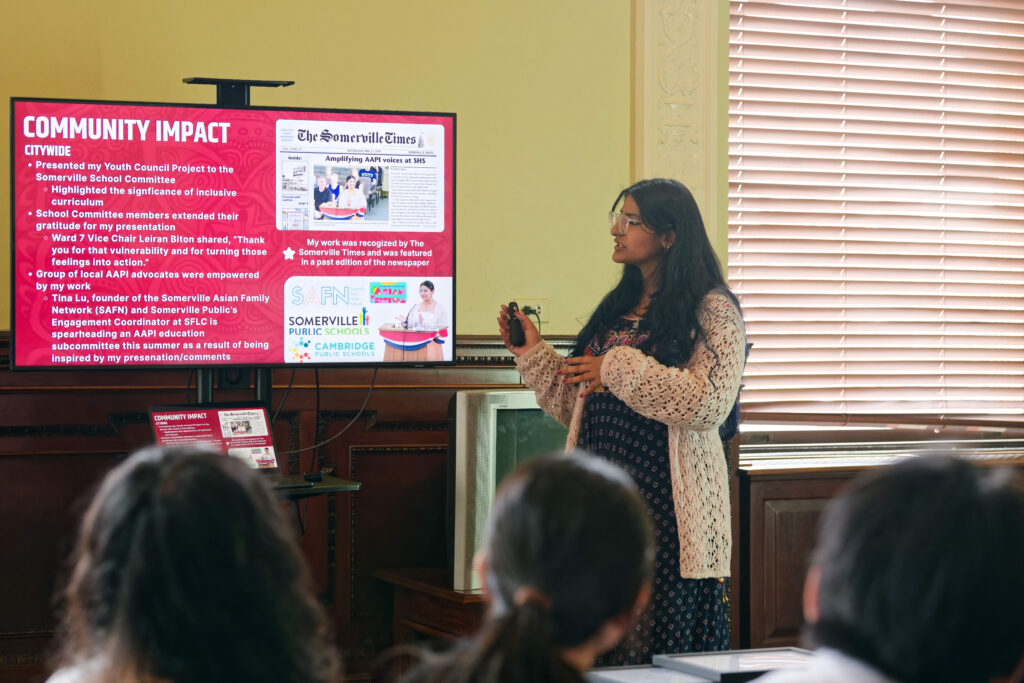
Diya Bhandari focused on representation through literature. After recognizing gaps in the AAPI stories available to students, she worked with her school library in Norwood to expand access to AAPI literature, highlight AAPI authors, and create resources that other schools and community groups can adapt.
Their work reflected broader statewide conversations about how students learn history and whose stories are represented in classrooms, including efforts such as the CARE Act, legislation co-sponsored by Representative Nguyen and other lawmakers that would support more inclusive curriculum and the teaching of underrepresented histories and communities.
Honoring Identity Through Storytelling
Other Youth Council members explored how identity, culture, and everyday experiences shape a sense of belonging.
Grace Zhang’s AAPI Unmuted project invited community members to share the stories behind their names, encouraging others to recognize names as an important expression of culture, identity, and personal history.
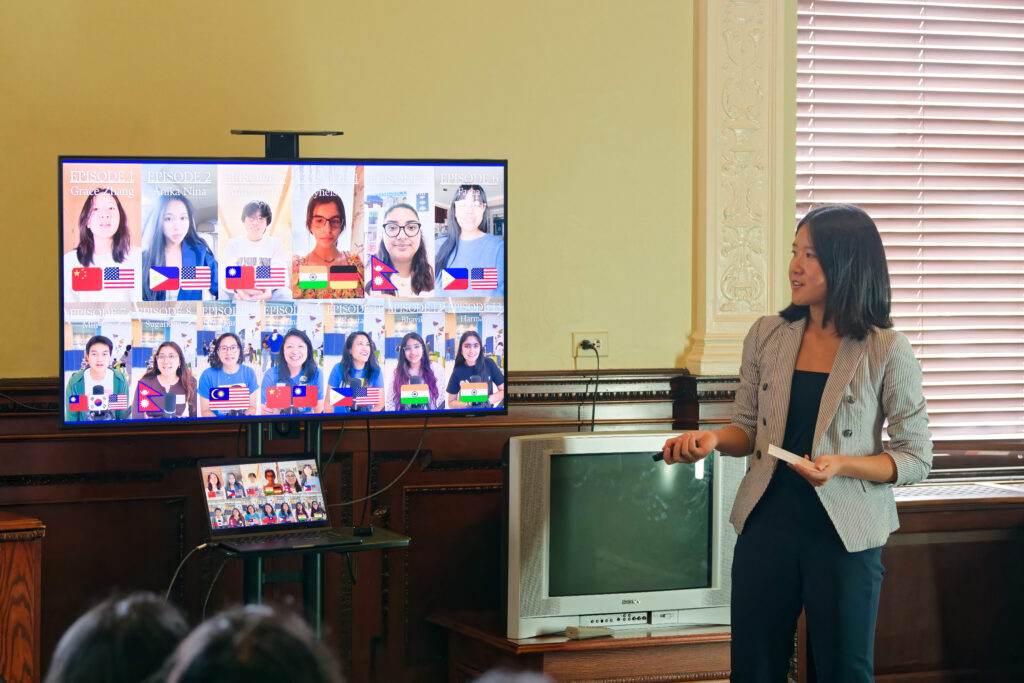
During the Youth Council Showcase, legislative staff from Representative Nguyen’s office connected Grace’s project to broader conversations about honoring AAPI identities, including Representative Nguyen’s own public reflections about reclaiming and honoring her name.
The discussion highlighted how seemingly small moments—such as taking the time to learn and pronounce someone’s name—can have a meaningful impact on whether people feel seen and valued.
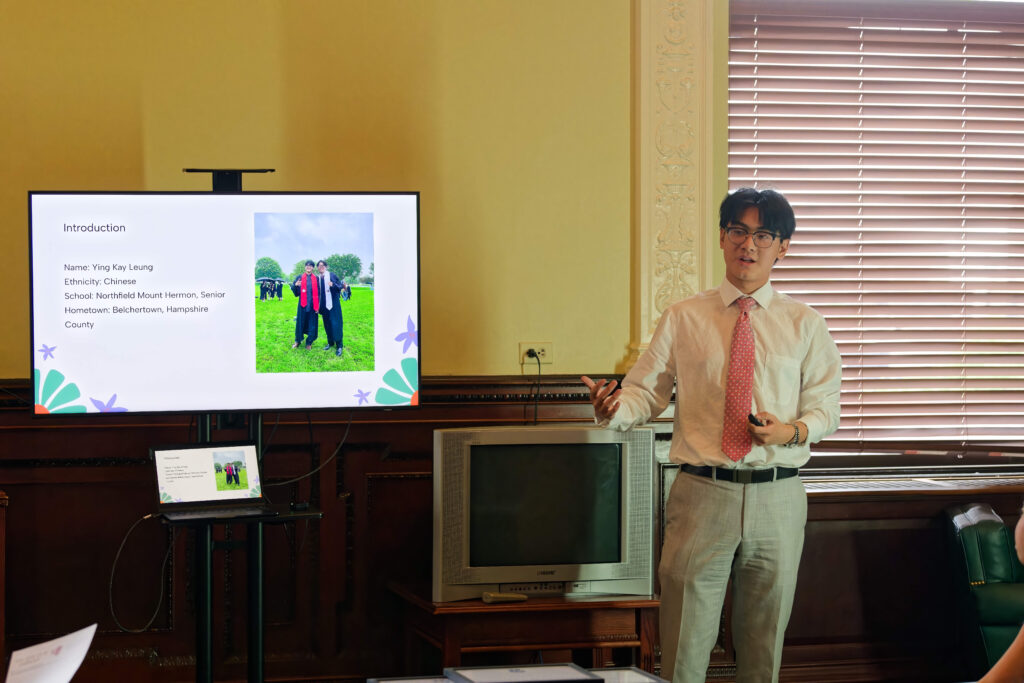
For Ying Kay Leung, belonging meant creating connections for AAPI youth in Western Massachusetts, where communities are often smaller and more dispersed. Building on his previous Youth Council project, he expanded an online storytelling platform where young people can share experiences related to identity, mental health, and community.
His work created a space where youth could recognize that they are not alone and that their experiences matter.
Improving Community Access and Well-Being
Several Youth Council members focused on how community systems can better respond to the needs of AAPI residents.
Rachel Huynh Roblinski worked to improve healthcare access by organizing educational sessions on healthcare resources and connecting community members with information about available services.
Skye Morishita partnered with the Boston Red Cross Food Pantry to better understand the experiences of AAPI community members accessing food assistance. Through multilingual surveys, she gathered feedback about community needs and identified opportunities to make services more culturally responsive.
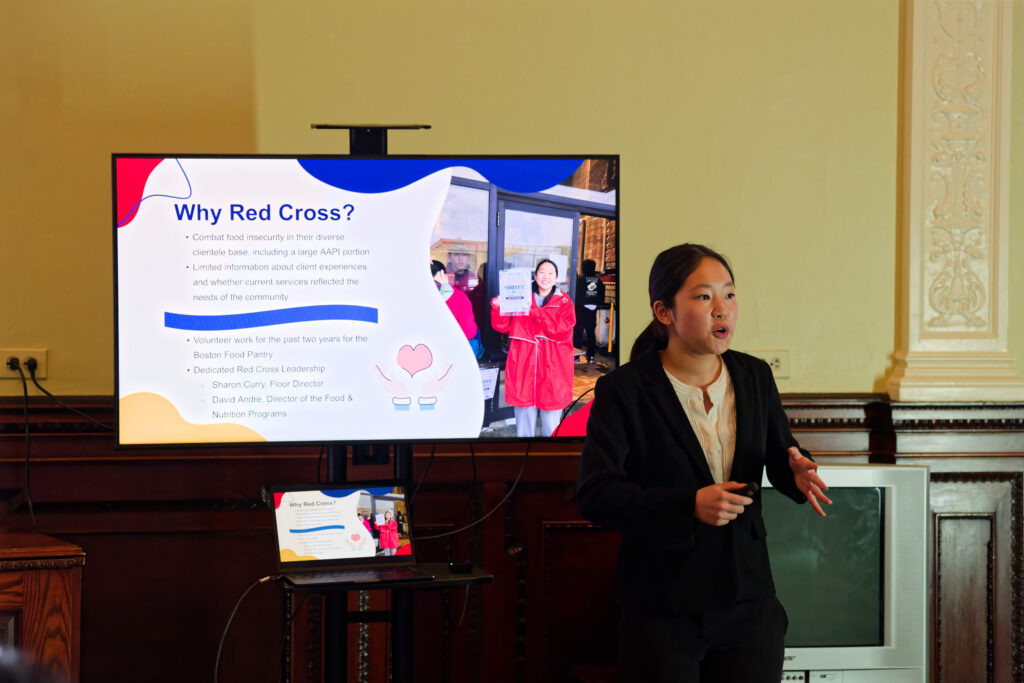
Jason Yin worked to improve access for newcomer families by developing multilingual resources that help students and families navigate school and community services in Weston.
These projects demonstrated how youth leaders can identify barriers, gather information, and help communities build more responsive systems.
Recognizing Stories That Deserve to Be Remembered
Several Youth Council members worked to bring greater visibility to AAPI experiences that are often overlooked in public narratives.
David Guo used grassroots advocacy, storytelling, and community events to highlight AAPI student-athletes and create opportunities for young people to build connection through athletics and cultural pride.
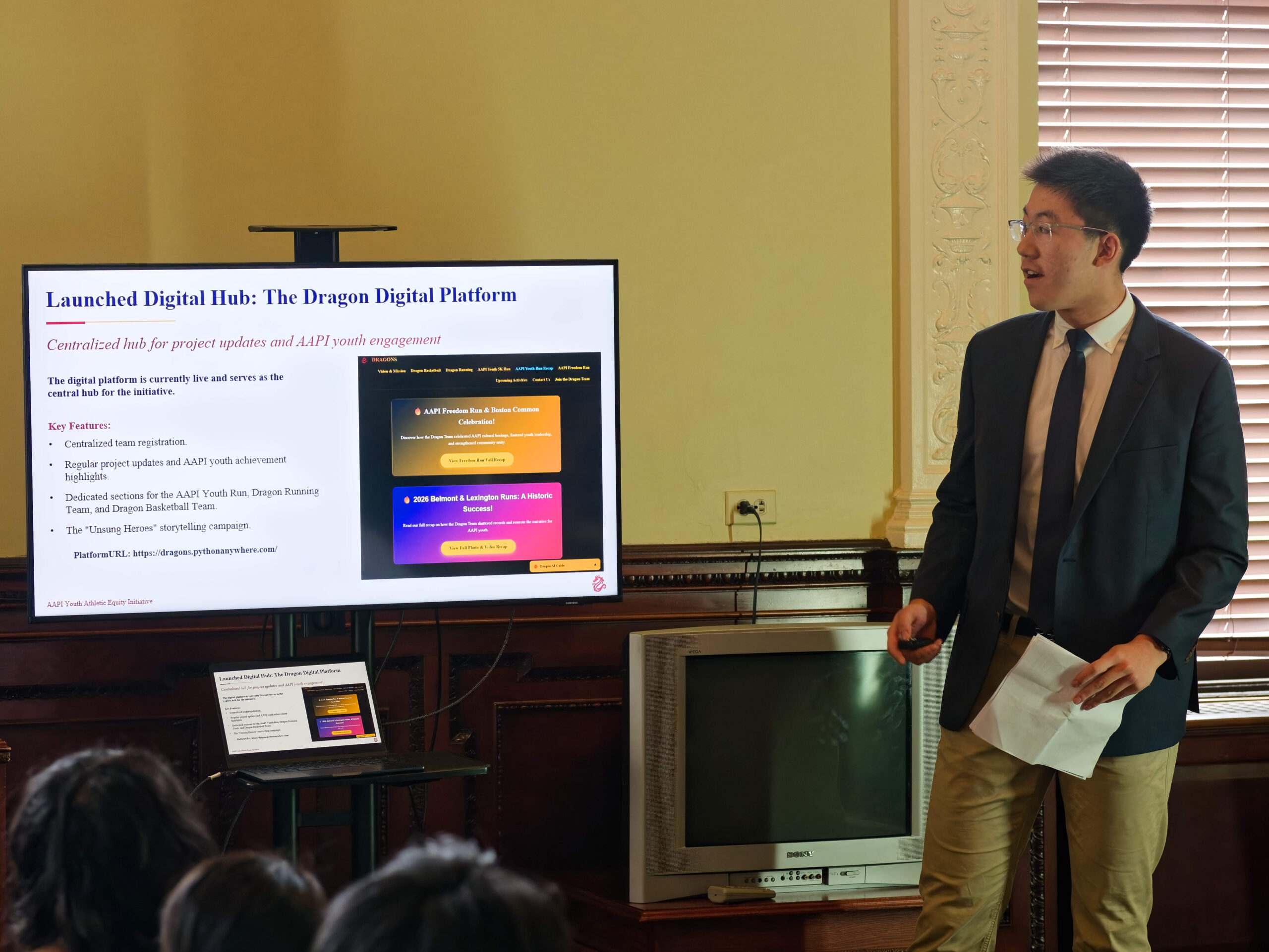
Through the Dragon Youth Running Team, David supported AAPI youth leadership and healthy development. His work continued at the AANHPI Festival, where he led the Freedom Run to celebrate AAPI heritage, strengthen community connection, and amplify youth voices.
The event also highlighted the broader role young people can play in shaping public narratives. During the festival, Commissioner Rakashi Chand reflected on the importance of recognizing AAPI history as part of American history. By bringing youth voices to the festival stage, David’s work reinforced that young people are not only inheriting these stories, but also helping shape the stories that come next.
Emily Wu focused on preserving the stories of AAPI community members whose contributions are often overlooked. By documenting the experiences of AAPI veterans through interviews and community storytelling, including Filipino American veteran Isabello “Bill” Solano, CWO3, her work helped ensure their service and contributions are recognized as part of the broader history of Massachusetts communities.
The projects highlighted here represent only a portion of this year’s Youth Council work. To explore all 14 student initiatives in greater depth, view the Youth Council Showcase presentation and the 2025–2026 Youth Council Program Report.
Strengthening Massachusetts’ Future Leadership
These projects reflect the many ways Youth Council members took initiative. Through research, partnerships, community engagement, and public presentations, they identified community needs and worked to address them.
Through the Youth Council, AAPIC is helping cultivate a new generation of civic leaders whose experiences reflect the communities they will one day serve. By creating opportunities for young people to develop their voices, engage with decision-makers, and turn ideas into action, AAPIC prepares Youth Council members to become advocates, educators, nonprofit leaders, entrepreneurs, public servants, and elected officials.
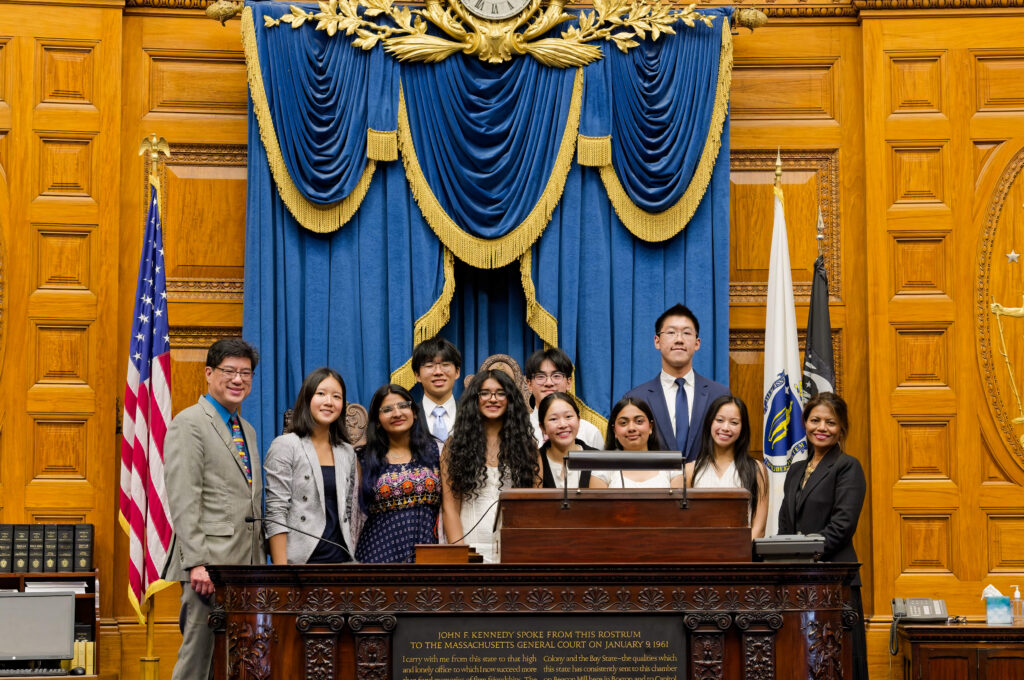
The 2025–2026 Youth Council demonstrated what is possible when young people are supported, connected, and trusted to lead. Through a year-long leadership experience grounded in research, collaboration, and community needs, students turned their ideas into projects that strengthened their schools and communities.
Investing in young leaders today strengthens the communities and civic institutions Massachusetts will rely on tomorrow.
Applications for the 2026–2027 AAPIC Youth Council are now open. AAPIC encourages AAPI high school students across Massachusetts to apply and become part of a growing network of young leaders working to strengthen their communities.